
Anti-metal NFC explained
Why normal NFC stickers fail on metal
Anti-metal NFC is just NFC made for metal surfaces. The ferrite layer sits between the tag and the metal, so the phone can still read the chip.
On metal?
Choose anti-metal.
Metal in between?
It will not scan well.
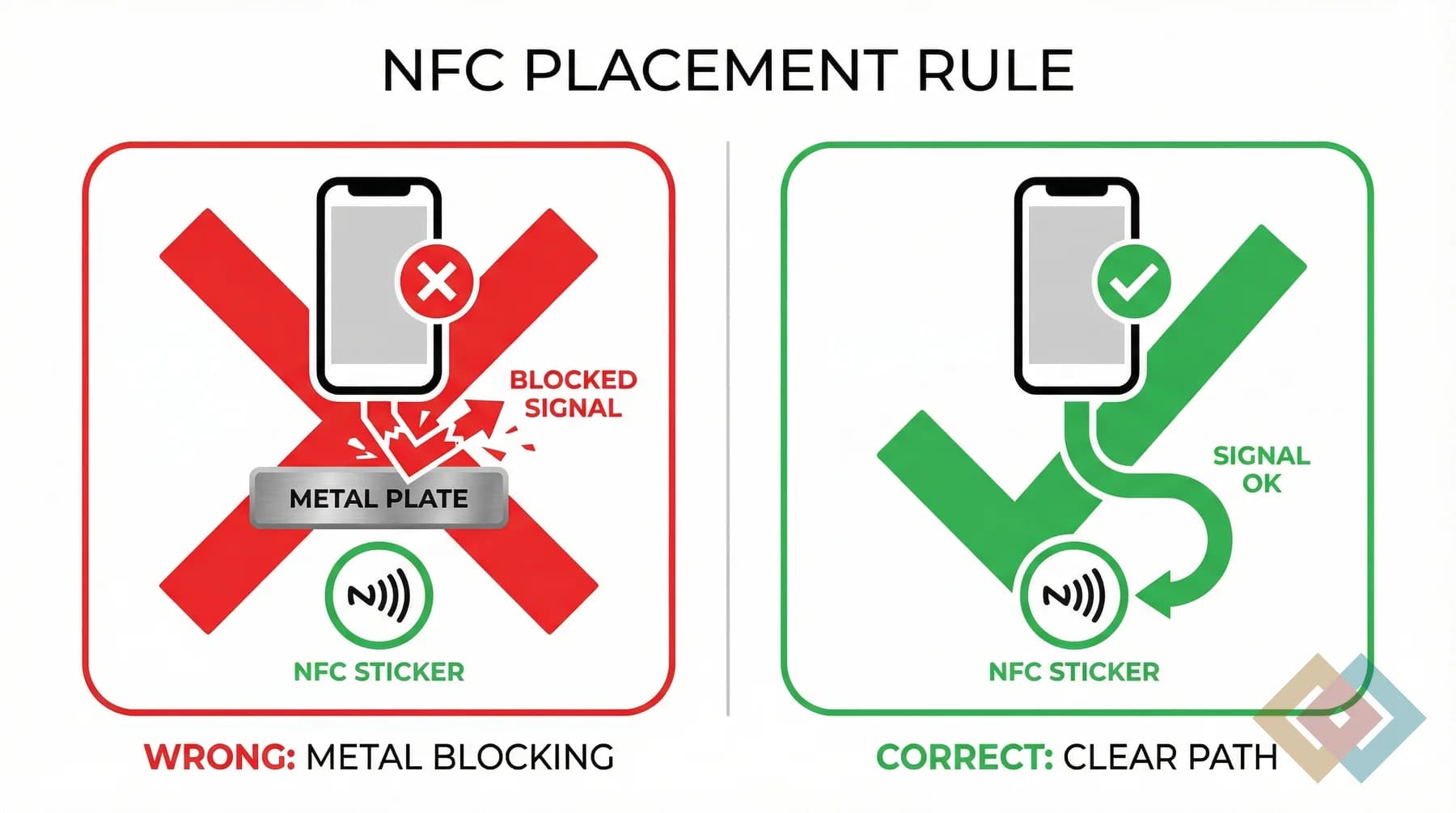
Simple rule
Phone -> tag -> metal.

The simple rule
The chip must face the phone.
There should not be metal between the phone and the NFC chip.
That is why a normal sticker fails on metal, and why anti-metal tags add a ferrite layer behind the chip.
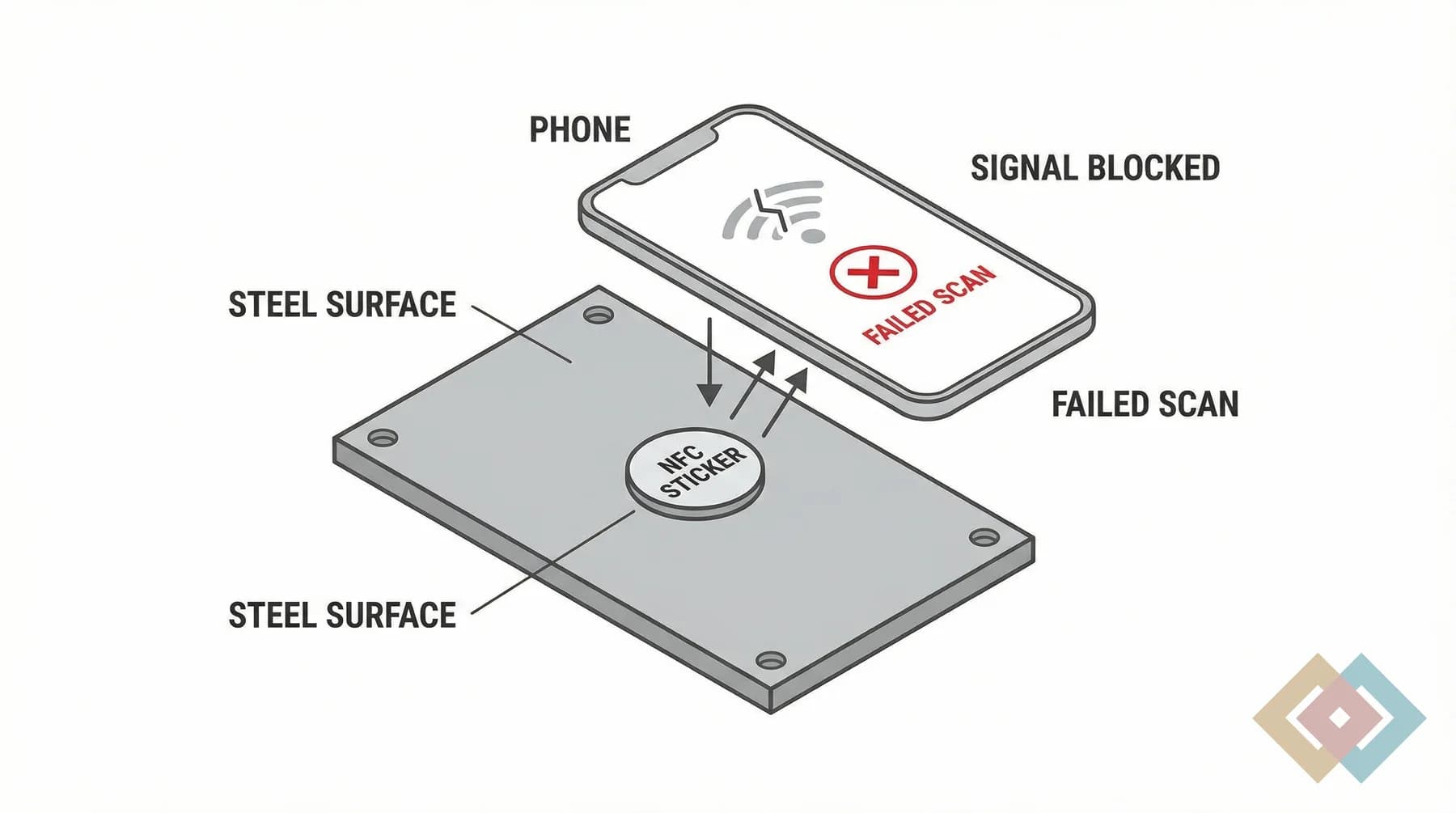
Why metal causes the problem
Normal NFC is not made for steel, aluminium, or machine bodies.
A regular NFC sticker works best on non-metal surfaces. Stick it directly on metal and the scan may become weak, very short, or dead.
In simple words: metal disturbs the field NFC needs.
What anti-metal NFC means
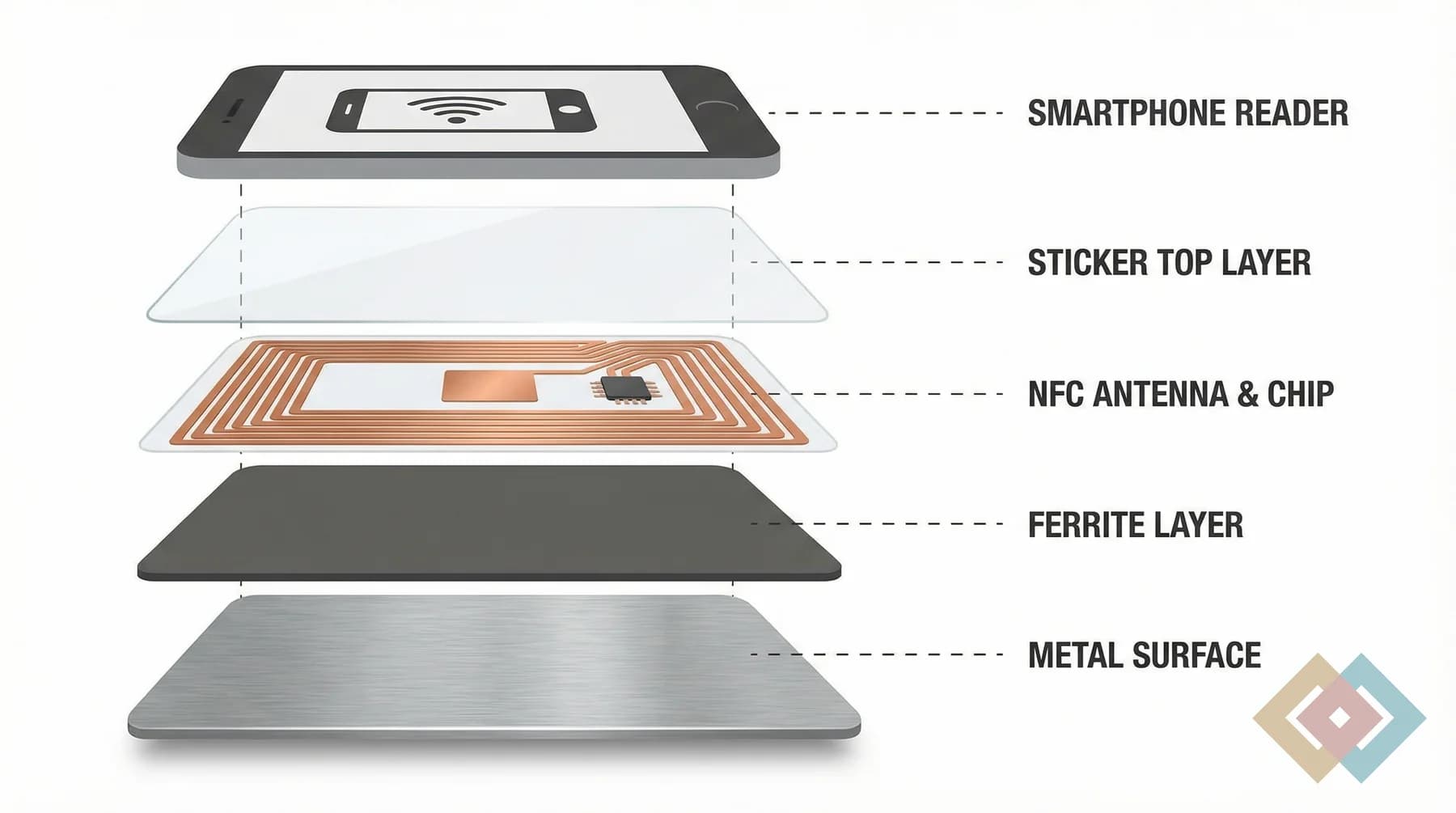
Anti-metal NFC = NFC tag + ferrite layer
An anti-metal NFC sticker is simply an NFC tag built for metal surfaces.
It places a ferrite layer between the chip and the metal so the phone can still read the tag more reliably.
Built for metal
Use it on cabinets, tools, appliances, fixtures, and machine panels.
Not magic
It is still NFC, just with the right layer behind it for metal mounting.
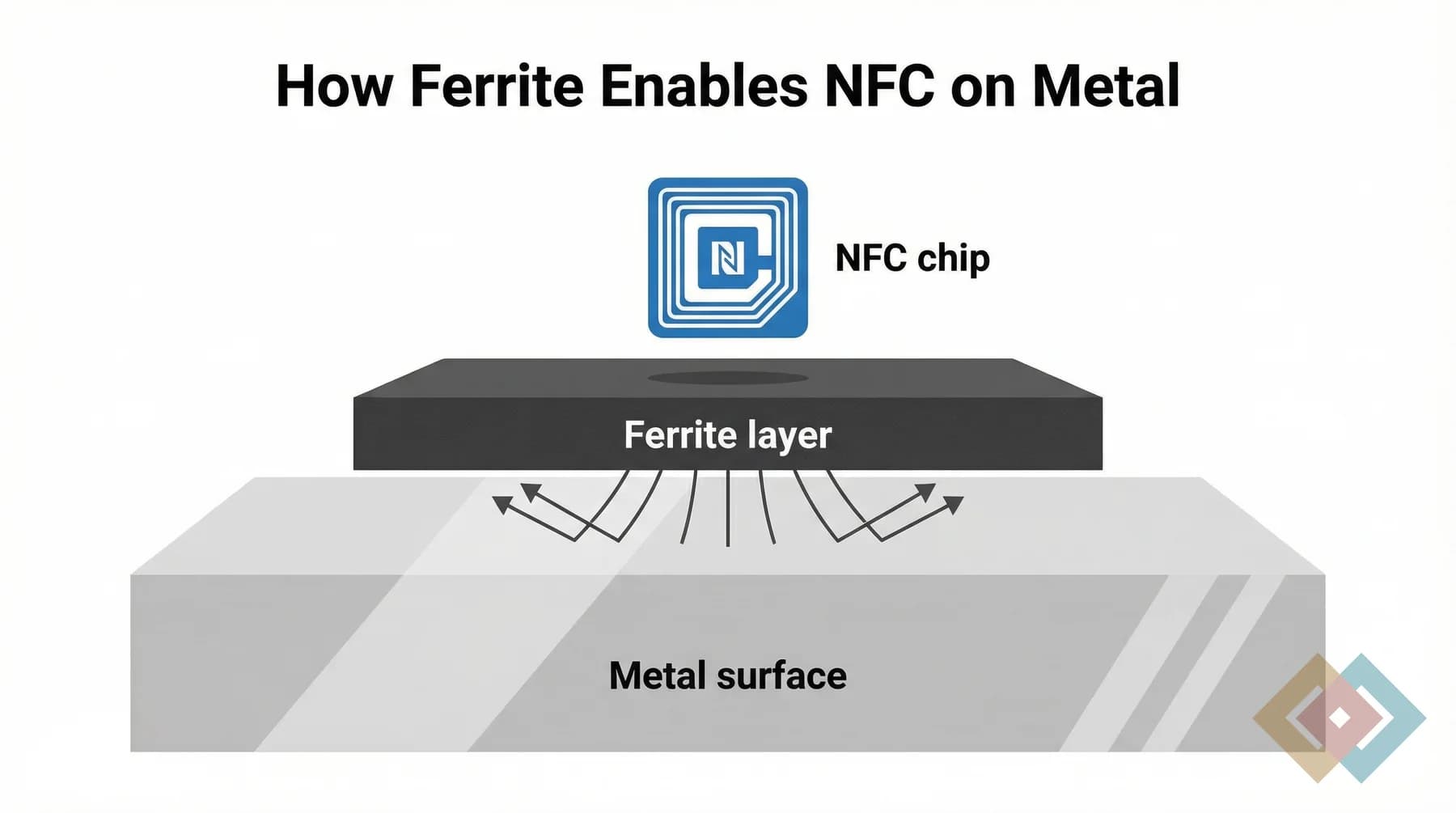
What ferrite does
It gives the chip a clean path to the phone.
Ferrite acts like a buffer. It reduces how much the metal interferes with the tag.
That is why anti-metal tags scan far more reliably on metal surfaces.
Bottom line
No ferrite on metal = unreliable NFC
Ferrite + NFC on metal = designed for metal use
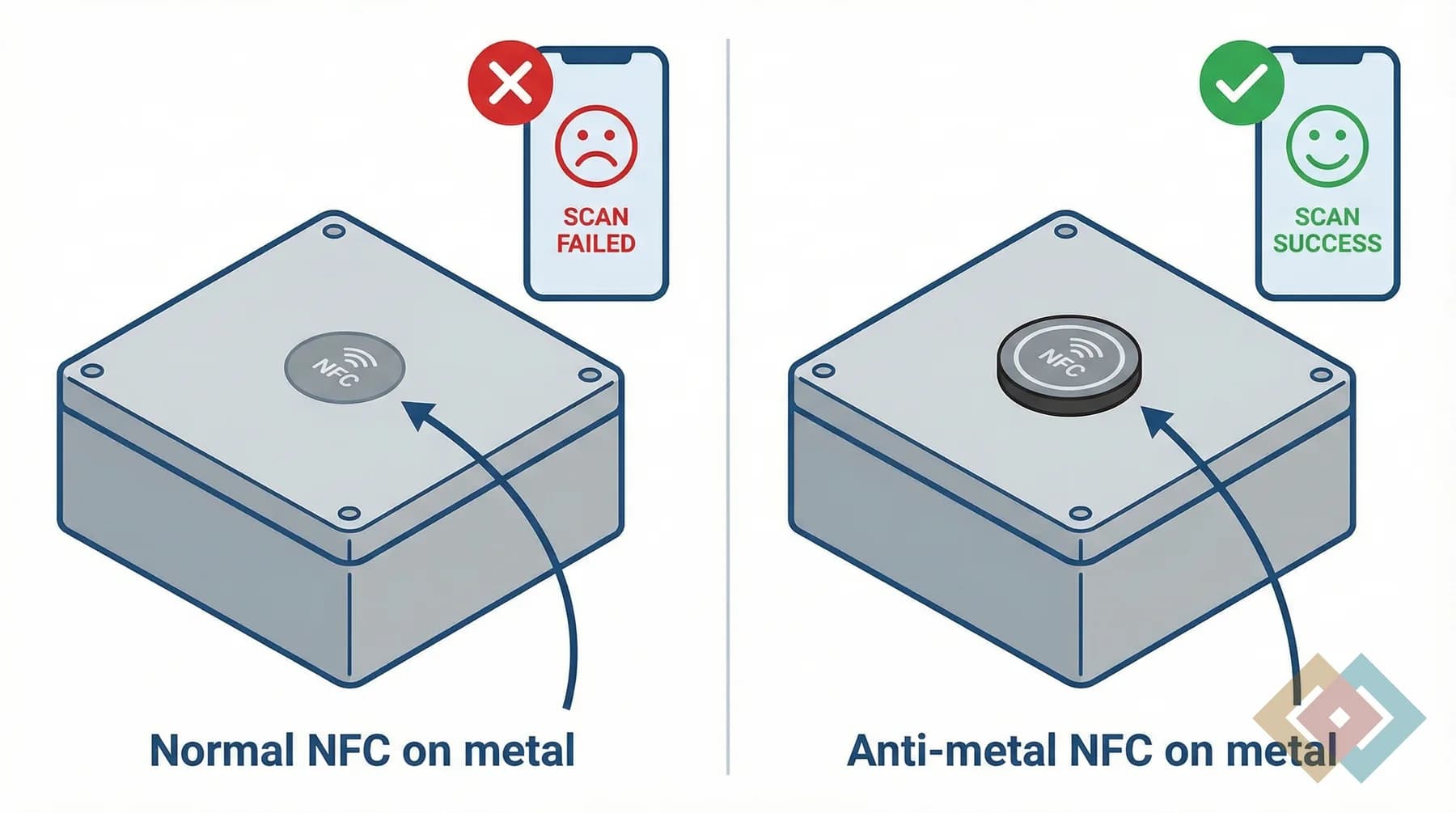
Before vs after
Same metal surface. Two very different results.
A standard sticker may fail on metal. An anti-metal sticker is built for it.
Where people use it
Anywhere the tag has to sit on a metal object.
Think machine labels, tool tracking, steel cabinets, electronics, metal packaging, and asset tags.
Machine panels
Tools and equipment
Metal product labels
Asset identification

Which one should you buy?
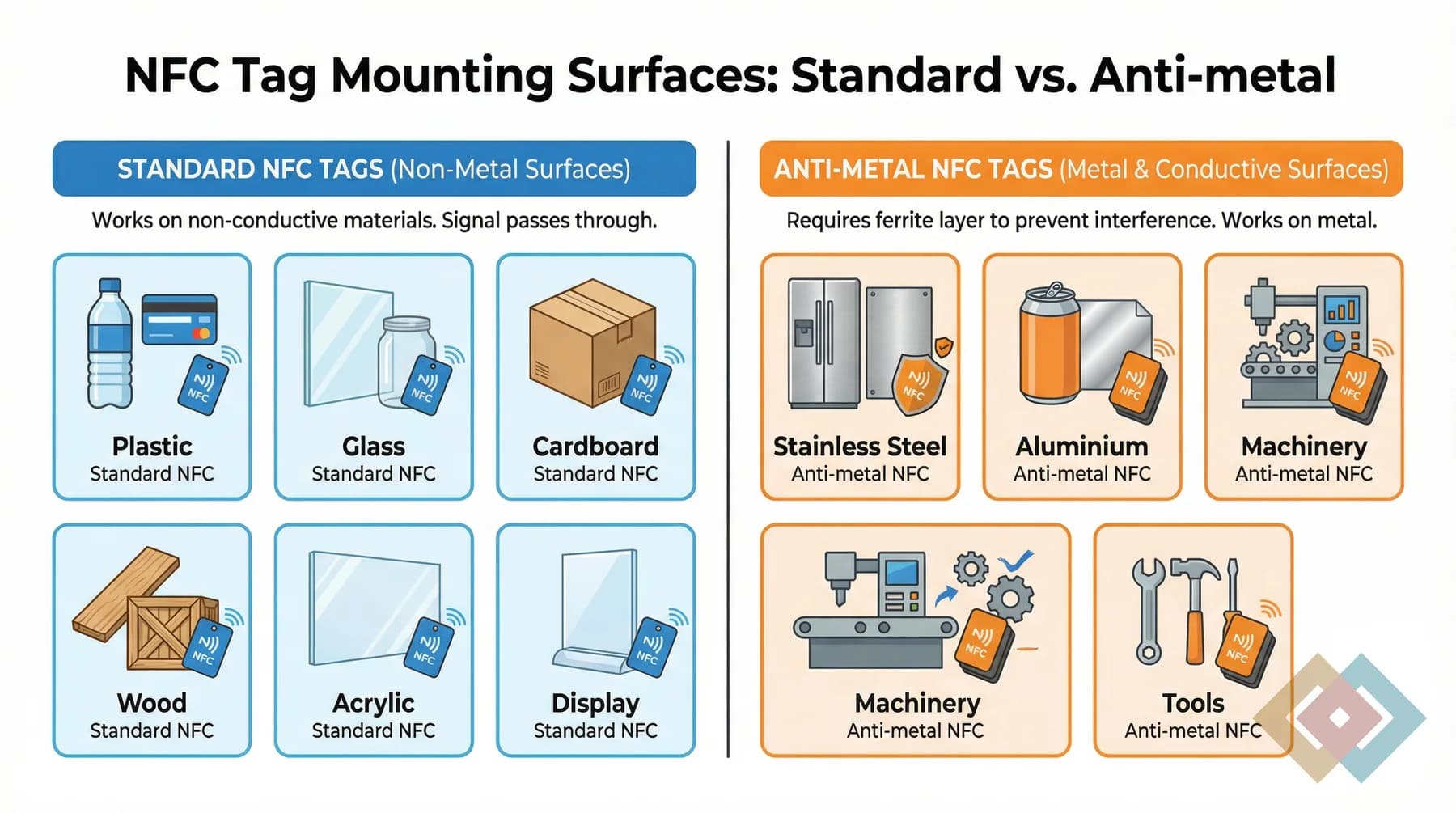
Choose based on the surface.
Your surface
Paper, plastic, glass, wood, acrylic
What to use
Use a standard NFC sticker
Your surface
Steel, aluminium, machine panels, tools, cabinets
What to use
Use an anti-metal NFC sticker
Your surface
Not sure what is behind the sticker
What to use
Test first or ask us before ordering
Bottom line
If your tag is going on metal, buy anti-metal NFC.
Common questions
Common answers for first-time buyers
Can I use a normal NFC sticker on metal?
Usually no. A normal NFC sticker may scan poorly or not scan at all when stuck directly on metal.
What is ferrite in an anti-metal NFC tag?
Ferrite is the layer placed between the NFC tag and the metal. It reduces interference so the phone can read the tag more reliably.
Can metal be on the back of the NFC sticker?
Yes, if the sticker is specifically made as an anti-metal NFC tag. That is exactly what anti-metal tags are designed for.
Can metal be between the phone and the NFC chip?
No. If metal sits between the phone and the chip, the NFC signal path is blocked and the scan will not work properly.
Do anti-metal tags work on non-metal surfaces too?
They can, but they are mainly meant for metal surfaces. On non-metal surfaces, a standard NFC sticker is usually the simpler and cheaper choice.
Are anti-metal tags thicker than normal tags?
Usually yes. The ferrite layer adds some thickness compared to a normal NFC sticker.
Which phones can read anti-metal NFC tags?
Most NFC-enabled smartphones can read them when the tag is mounted correctly. The key is the placement, not a special phone type.
Need tags for metal surfaces?
Choose the tag made for the job.
Anti-metal NFC stickers are the right choice for steel, aluminium, cabinets, tools, machines, and other metal objects.